For years, the debate around AI and jobs lived mostly in economic research papers and think pieces. In August 2026, it is landing in real labor data. July’s US jobs report showed unexpected cuts across several white-collar sectors.
Entry-level roles in writing, coding, data analysis, customer service, and legal research are seeing the sharpest declines. Young workers entering the job market are finding that the bottom rung of the career ladder is getting pulled away faster than anyone predicted.
What the Data Actually Shows
Digital Applied published an analysis in August 2026 showing no broad spike in overall US unemployment yet. The aggregate numbers look manageable. But underneath that headline figure, the story is much more concentrated.
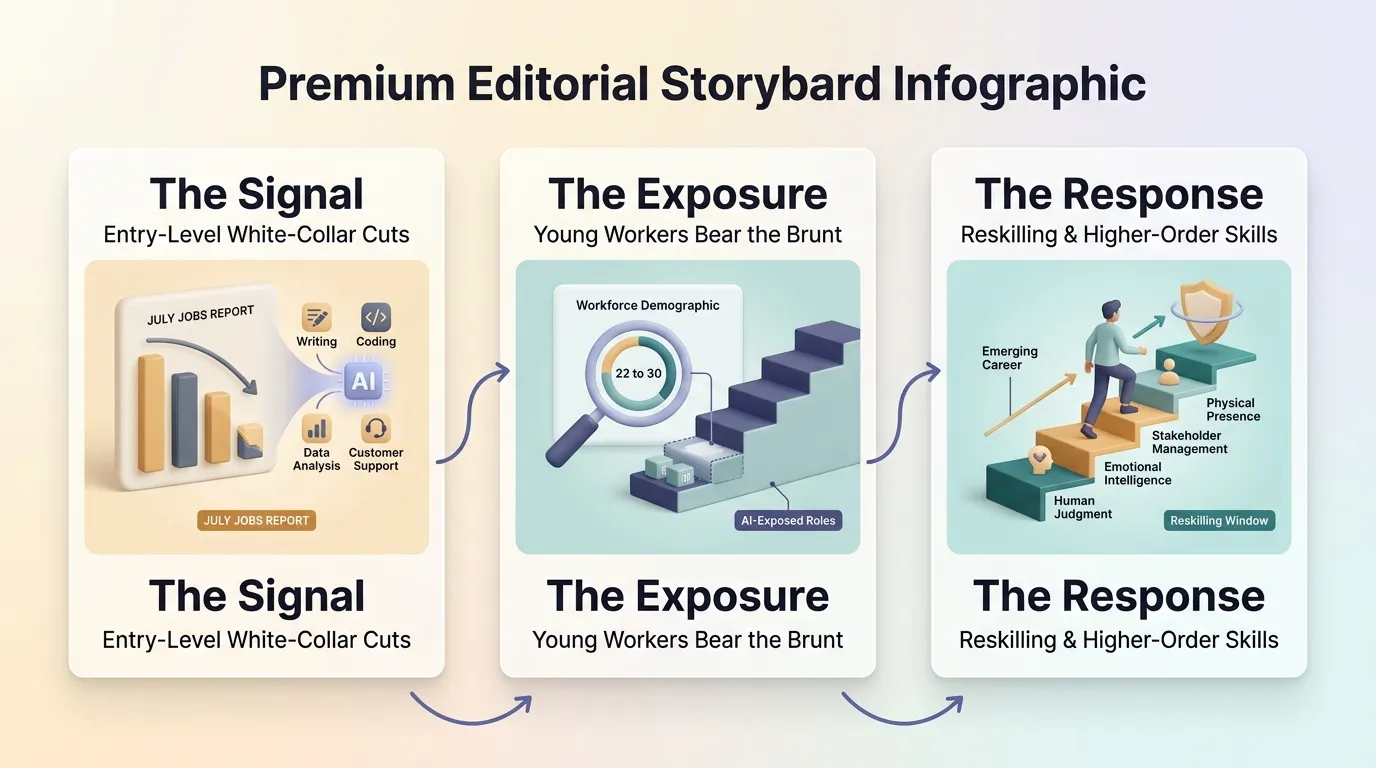
Workers aged 22 to 30 in AI-exposed roles are losing jobs at a rate significantly above the national average. Internships and junior positions that historically served as training grounds are being replaced by AI tools that can handle those tasks at a fraction of the cost.
Goldman Sachs has projected that unemployment could rise by half a percentage point during the AI transition period, but many economists now think that estimate may be too conservative if the pace of automation continues at its current rate.
Who Is Most at Risk and What Can Be Done
The jobs most vulnerable are those that involve clear, repeatable cognitive tasks with defined inputs and outputs. Code review, first-draft writing, basic data reporting, invoice processing, and customer support scripts are all getting automated at scale.
Jobs that require physical presence, human judgment in ambiguous situations, emotional intelligence, and complex stakeholder management are holding up better.
The challenge is that many people currently entering the workforce do not yet have those higher-order skills, and acquiring them takes time. For a clear view of which job categories are most exposed and what workers can realistically do about it, this video is worth your time:
The Jobs Most at Risk As AI Reshapes the Workforce
Governments and educational institutions are under real pressure now. Reskilling programs, adjusted university curricula, and social safety net reforms are all being discussed with urgency that was not there even six months ago. The window to act before disruption becomes crisis is narrowing quickly.
Quick Links: