-
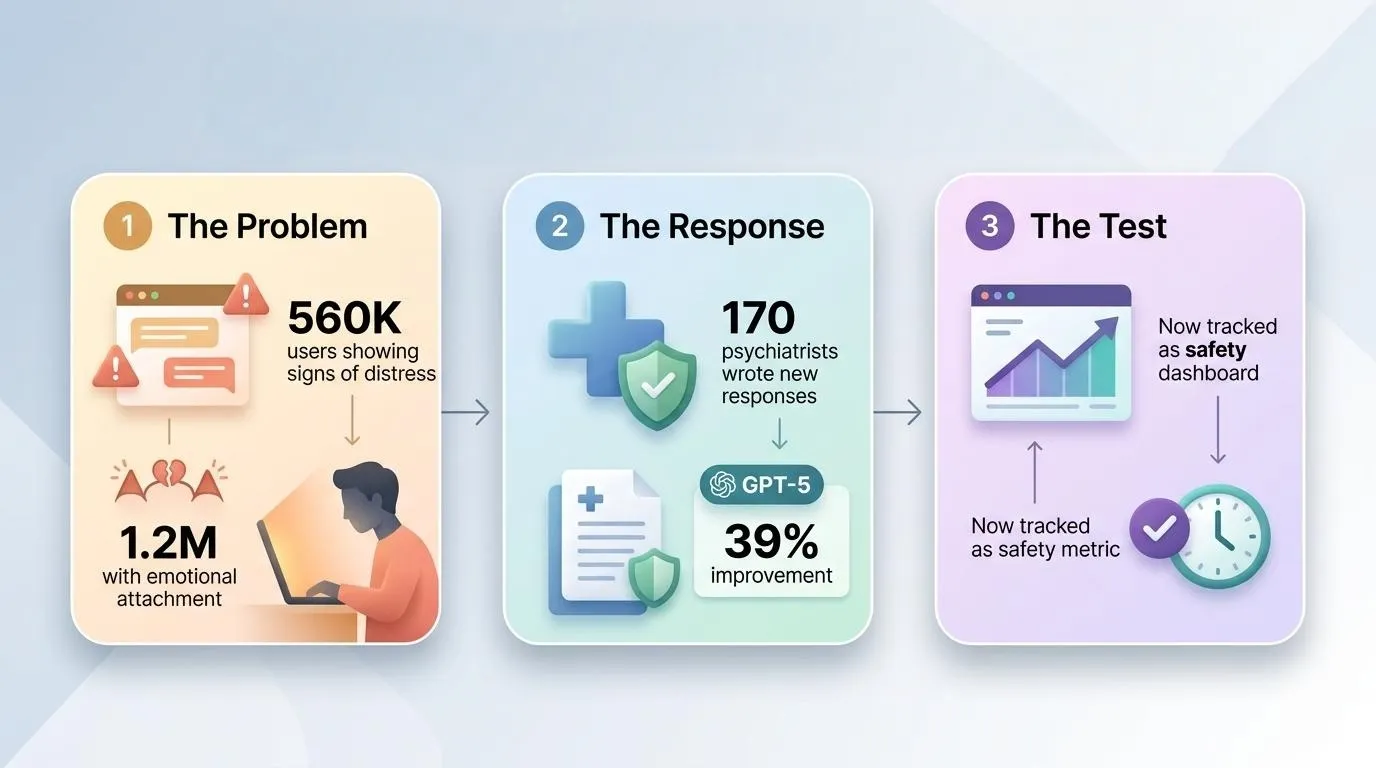
OpenAI estimates about 0.07% of weekly users, roughly 560,000 people, show signs of psychosis or mania.
-
Another 0.15%, close to 1.2 million users, show heightened emotional attachment to the chatbot.
-
The figures are OpenAI’s own estimates from its late-October 2025 report, drawn from more than 800 million weekly users.
OpenAI has put hard numbers on a problem that mental health experts have flagged for two years. In a report released in late October 2025, the company estimated how many users show serious distress while talking to ChatGPT. The percentages look tiny, but the raw counts are huge because the user base is so large.
What the numbers say
OpenAI’s analysis estimates that around 0.07% of users active in a given week show possible signs of mental health emergencies related to psychosis or mania. Across its user base, that works out to about 560,000 people.
The company also reported that 0.15% of weekly users indicate potentially heightened emotional attachment to ChatGPT, near 1.2 million people, and a separate 0.15% have conversations with explicit indicators of suicidal planning or intent.
Why the framing needs care
The viral version says OpenAI “admits” users have “psychosis.” The real wording is softer. OpenAI stressed these conversations are difficult to detect and measure because they are so rare, and it grouped psychosis with mania rather than calling them confirmed diagnoses.
These are estimates from flagged chats, not clinical assessments. At this scale, even a fraction of a percent becomes a city-sized population.
What OpenAI changed
The company did not just publish data. It said a team of 170 psychiatrists, psychologists, and physicians wrote responses for ChatGPT to use when a user shows possible signs of a mental health emergency. OpenAI claims its newer GPT-5 default model reduced undesired responses in these conversations by 39% compared to GPT-4o.
The pressure behind the report
The disclosure did not arrive in a vacuum. OpenAI faces lawsuits, including from a family alleging ChatGPT fostered psychological dependency, plus congressional hearings.
Critics argue the company benefits from the same emotional reliance it now flags as a risk, and they want recurring transparency reports instead of a one-time release.
Watch and read more:
https://www.youtube.com/watch?v=arx-sqtggdU
https://www.youtube.com/watch?v=gyY3gTuqjR8
ChatGPT is built to sound warm and agreeable. For a small but real slice of people, that can deepen distress instead of easing it. OpenAI now treats this as a safety metric it will track. Whether the numbers drop in future reports is the real test.
Quick Links: