The proxy services market has undergone a complete identity shift in the last few years. If you think proxies are primarily tools for privacy-conscious individuals trying to browse anonymously, you are thinking about a market that no longer exists in its old form. In 2026, the core customer for proxy services is a business, and the use cases have moved far beyond personal privacy.
Proxies moved away from the privacy use case — VPNs took over that side because they are easier and safer. Proxies moved into a different role. Now they are tools for getting real work done. Companies use them to research markets, collect public data, test websites in different countries, and run multiple accounts without getting blocked.
Static ISP proxies matter because they look like real home users but stay stable and trusted. With websites blocking bots more aggressively than ever, the right proxy setup can make or break a workflow.
This is an important distinction for anyone evaluating proxy services in 2026. The questions you should be asking are not about personal privacy or IP masking for general browsing. They are about reliability at scale, geographic coverage, data handling transparency, and whether the proxy type matches your actual use case.
The main proxy types and when to use them
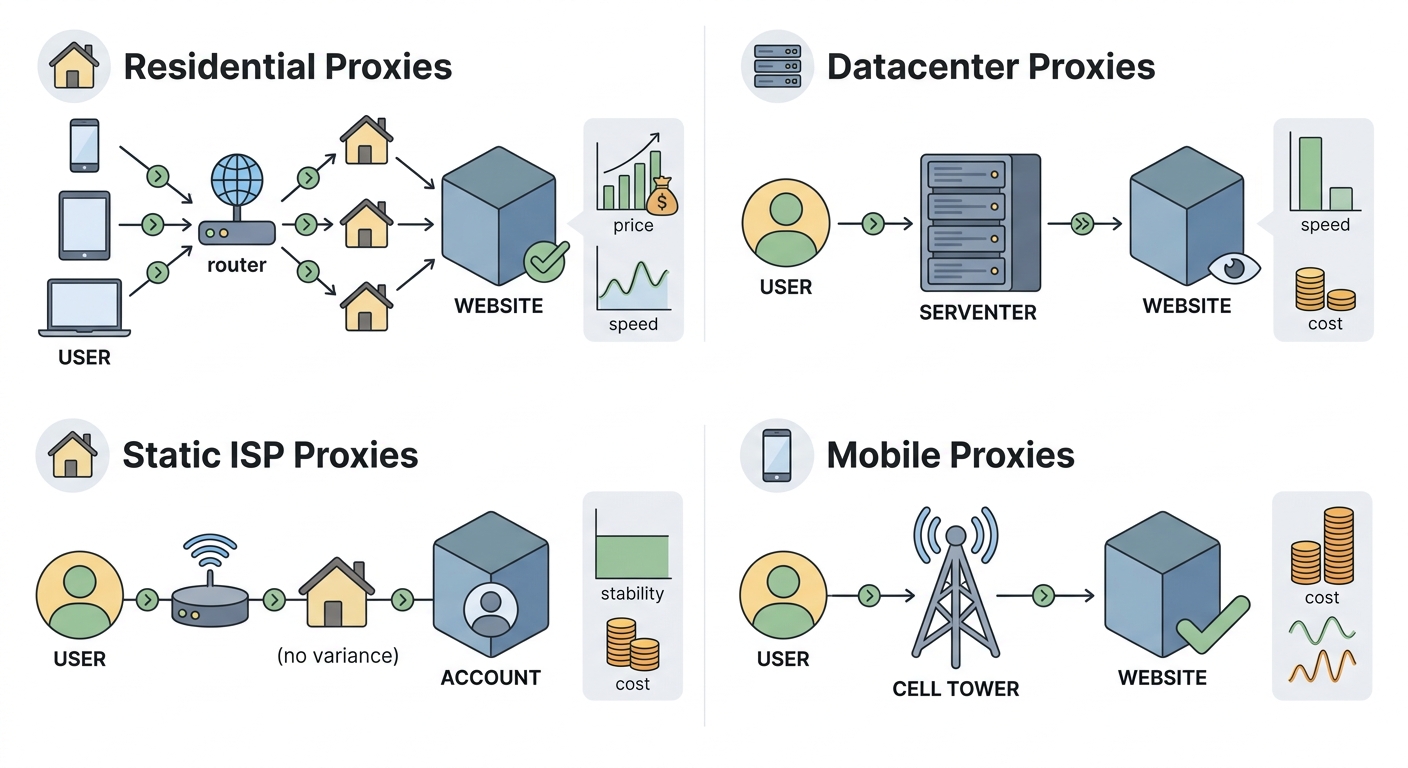
Residential proxies route traffic through real home internet connections. They are the hardest for websites to detect and block, making them the go-to for anything involving anti-bot systems. They tend to be more expensive per gigabyte and can have variable speeds depending on the underlying residential connection.
Datacenter proxies are fast and cheap but easier to detect. They work well for tasks where speed matters more than appearing like organic traffic — price monitoring, bulk data collection from sites without aggressive bot detection, or internal testing environments.
Static ISP proxies sit in the middle. They look like real home users but stay stable and trusted — a critical combination for tasks requiring both authenticity and consistency over time.
These are particularly valuable for account management use cases where you need to appear as a consistent identity over multiple sessions.
Mobile proxies route through real mobile carrier connections. They carry the highest trust level because mobile IPs are rarely flagged, but they come with the highest cost and the most variable performance.
What matters most when choosing a provider in 2026
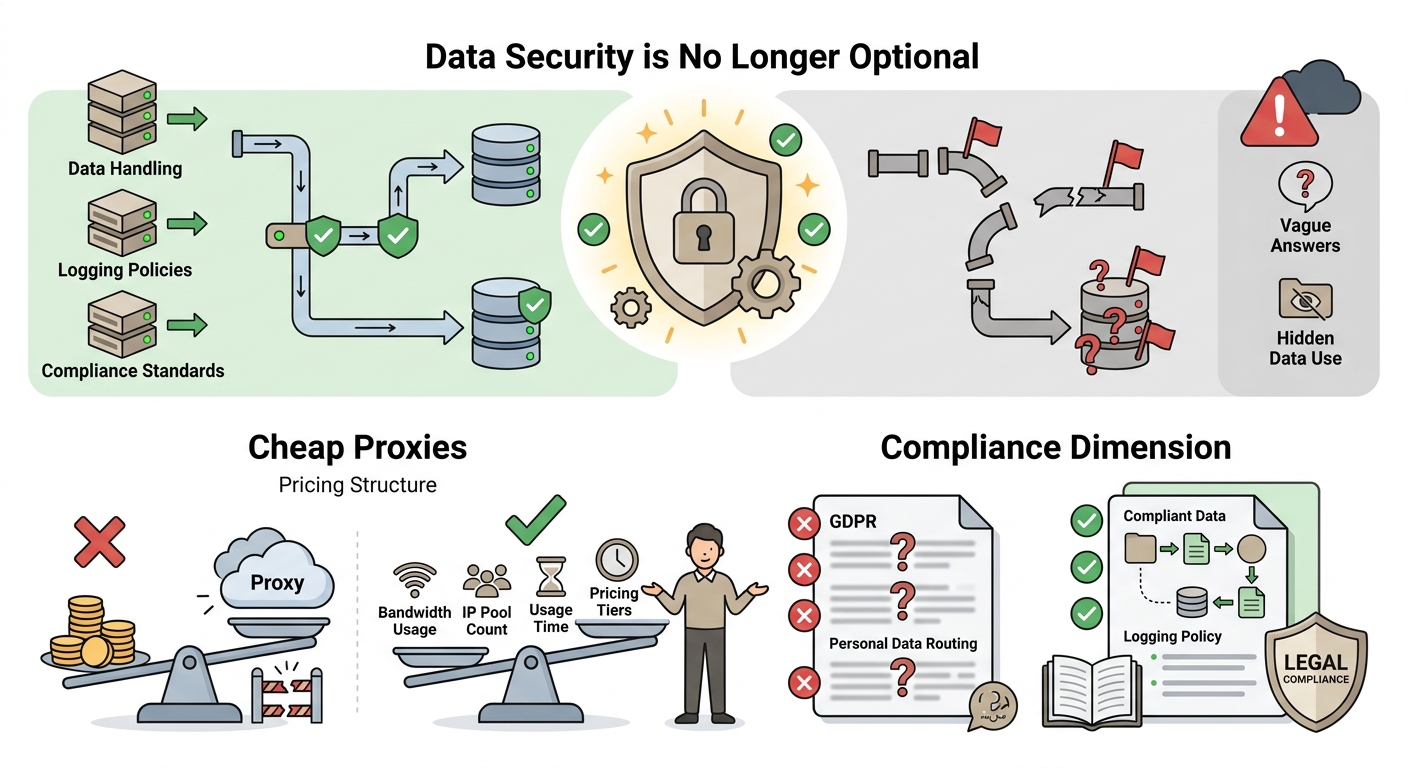
As regulations tighten in 2026, working with a provider that takes data security seriously is no longer optional. Good providers are clear about data handling, logging policies, and compliance standards. Vague answers on these questions are a red flag.
Cheap proxies are usually cheap for a reason — pricing should match how you actually use proxies, with charges structured around bandwidth, IP count, or usage time depending on the use case.
The compliance dimension is genuinely new for this market. GDPR and its international equivalents have created real legal exposure for businesses using proxy services that collect or route personal data without clear policies. When evaluating providers, the logging policy and data handling documentation should be reviewed carefully — not just the speed benchmarks.
💬 Reddit signal: r/webdev and r/datascience communities regularly discuss proxy providers. The threads that are most useful in 2026 focus heavily on anti-detection capability and compliance. The consensus is clear: free or very cheap proxy services are not viable for professional use anymore. The cost of a blocked IP or a compliance incident exceeds the savings from using an inadequate provider.
🐦 Twitter/X signal: Data professionals on X sharing proxy service experiences consistently highlight two things in 2026 — rotating residential proxies for scraping tasks and static ISP proxies for account-based workflows. The threads also note that provider quality variation is high, and testing before committing to volume is essential.
If your business relies on public web data, competitor price monitoring, geo-testing, or multi-account operations, the proxy services market in 2026 offers genuinely capable infrastructure. The key is matching the proxy type to the task and choosing a provider with real transparency on data handling.
Quick Links: