One of the more significant data points in the tech news cycle this week is DuckDuckGo reporting a 30% increase in app and browser installs. That kind of growth for a privacy-focused search alternative is not a niche development.
It is a signal about how a meaningful chunk of internet users feel about the direction Google has taken, and it has real implications for SEO professionals, content publishers, and anyone building an online audience.
DuckDuckGo reported a 30% increase in app and browser installs, driven by users seeking alternatives to Google’s integrated AI-generated search results. Privacy-focused messaging and independence from Big Tech AI features resonated amid growing user concern.
The driver here is worth understanding. Users are not just seeking privacy from data collection in the traditional sense. Many of the new DuckDuckGo users are specifically opting out of AI-generated search results.
They want to see actual web pages ranked by relevance, not AI summaries that may or may not accurately represent the source content. This is a backlash against the AI Overviews format that Google has been pushing aggressively — and it is growing.
What this means for publishers and content creators
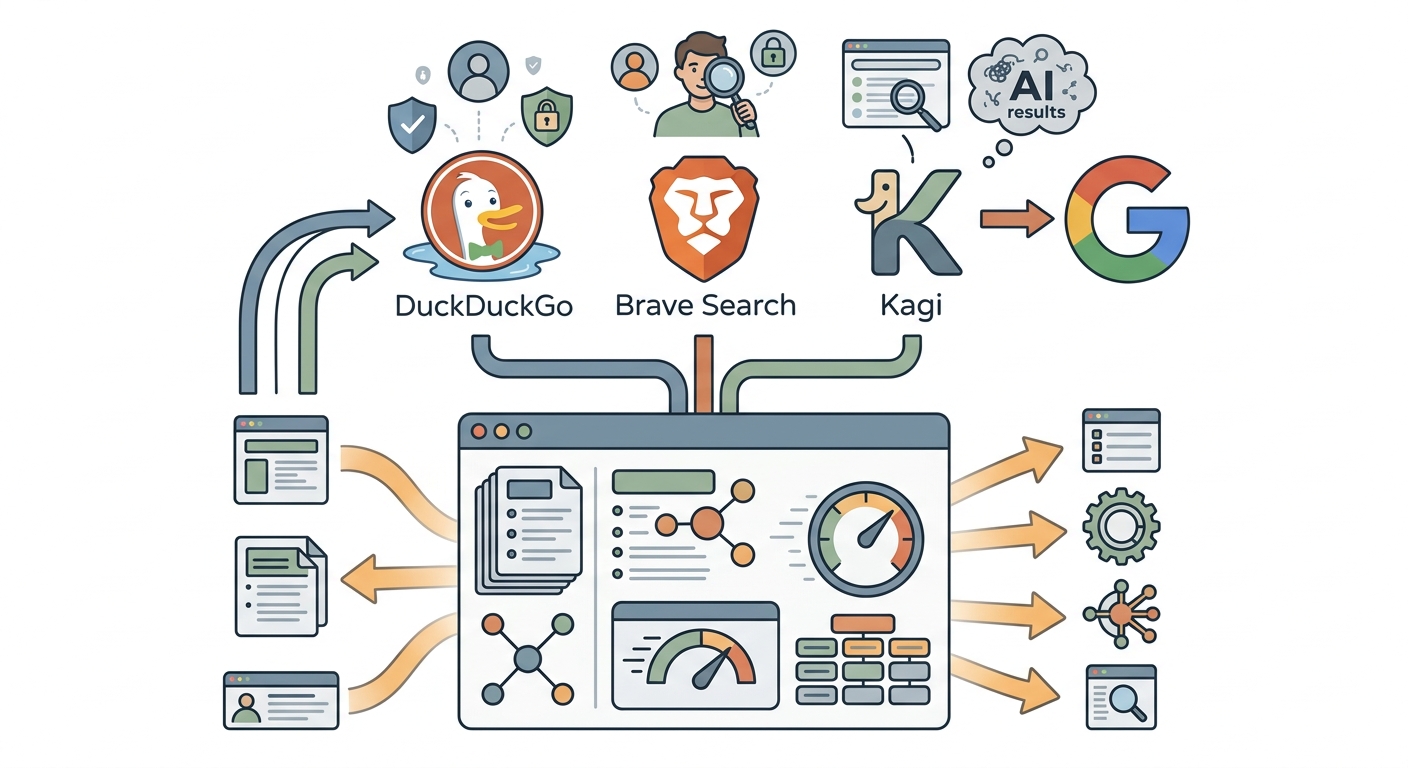
If a significant portion of your target audience is privacy-conscious, technically literate, or specifically skeptical of AI search results, your traffic sources may already be shifting in ways that standard Google Search Console data is not fully capturing. DuckDuckGo, Brave Search, and Kagi represent a growing share of the search market that is explicitly underserved by AI-heavy Google results.
For SEO strategy, this argues for a continued investment in fundamentals that work across search engines — clear, well-structured content, strong entity markup, accurate metadata, and page speed. These signals work in Google, work in DuckDuckGo, and work in every AI search system.
The sites that have invested in genuine content quality rather than gaming AI Overview optimization are in a strong position regardless of which search engine sends traffic.
The broader privacy trend

The DuckDuckGo growth is part of a wider pattern. Browser-level privacy tools are standard in Firefox, Brave, and Safari. VPN adoption has risen sharply. The expectation that online activity is tracked by default and used commercially is increasingly something users are actively pushing back against rather than passively accepting.
For businesses that rely on third-party tracking and cross-site behavioral data for targeting, this shift is a genuine structural pressure. For publishers who rely on organic search traffic and build direct audience relationships through email and subscriptions, it is largely neutral or positive — direct relationships are more durable than algorithm-dependent ones regardless of which privacy tool is used.
💬 Reddit signal: r/privacy and r/degoogle are active communities where DuckDuckGo and alternative search engines are discussed regularly. The sentiment around Google’s AI Overviews is consistently negative in these communities — users feel that AI summaries reduce their ability to evaluate sources themselves. The 30% growth figure was widely shared and validated the anecdotal experience these communities had been reporting.
🐦 Twitter/X signal: Tech commentators on X have been highlighting the DuckDuckGo growth alongside broader data on declining Google search satisfaction scores. The threads note that Google is in an uncomfortable position — its AI search features are simultaneously its biggest competitive bet and the primary driver of user defection to alternatives.
The takeaway for anyone building digital properties in 2026 is this: do not assume Google will remain the only game in town indefinitely. Build content and audience relationships that are platform-agnostic.
The winners in online publishing over the next decade will be the ones with direct audience relationships that do not evaporate when search algorithms change.
Quick Links: